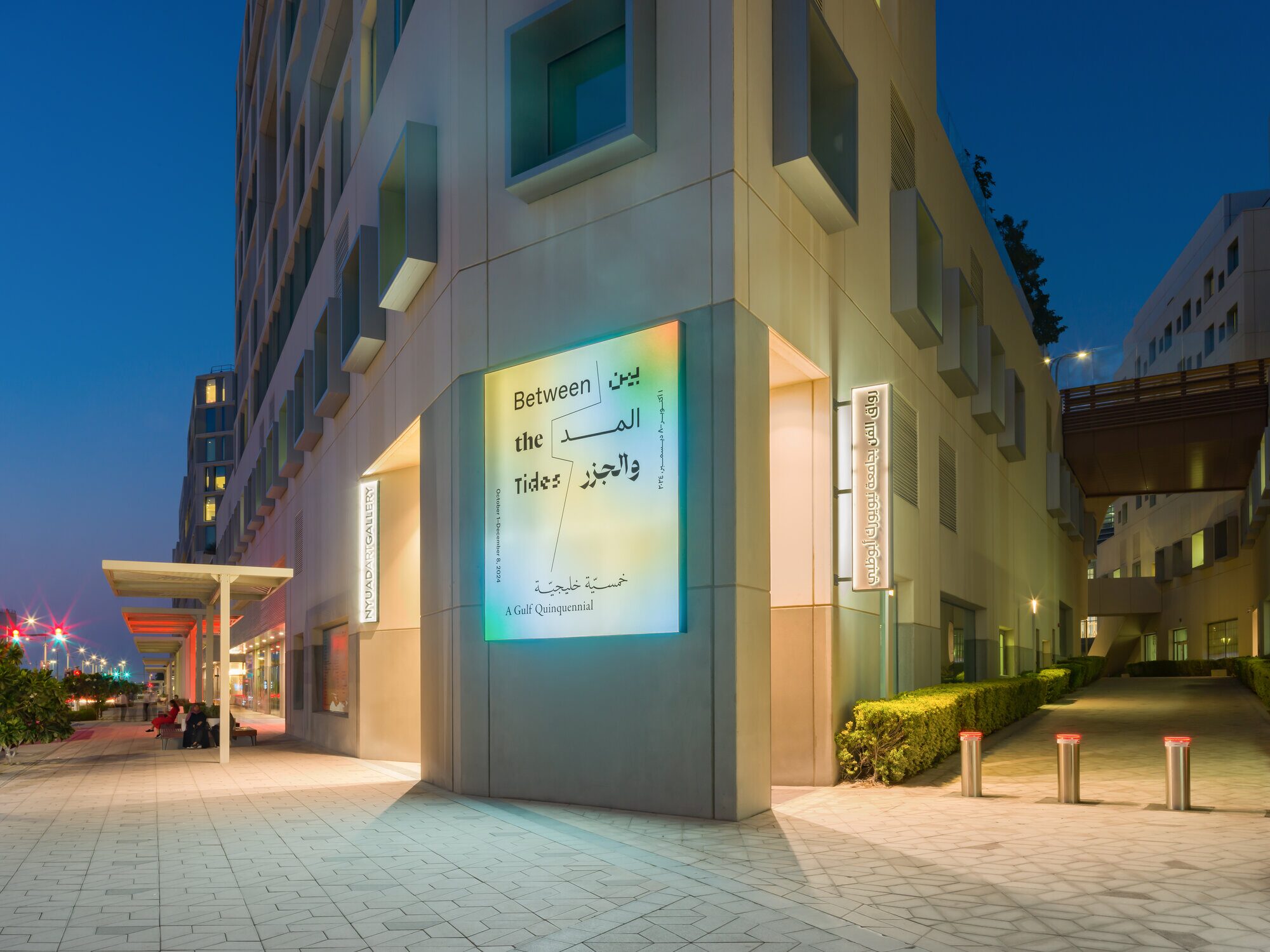
Between the Tides: A Gulf Quinquennial
Artists Alia Ahmad · Afra Al Dhaheri · Noor Al-Fayez · Shaima Al Tamimi · Mohammad AlFaraj · Abdulrahim Alkendi · Mohamed Almubarak · Mariam M. Alnoaimi · Sophia Al Maria · Aseel AlYaqoub, Yousef Awaad Hussein, Asaiel Al Saeed & Saphiya Abu Al-Maati · Christopher Joshua Benton · Sarah Brahim · Civil Architecture (Hamed Bukhamseen & Ali Ismail Karimi) · Vikram Divecha · Faissal El-Malak · Hazem Harb · Bu Yousuf · Aziz Motawa · Camille Zakharia & Ali Ismail Karimi · Ayman Zedani · Deepak Unnikrishnan · Mohammad Sharaf
Between the Tides: A Gulf Quinquennial is a non-comprehensive survey exhibition focusing on practices that are directly or tendentially based in the Gulf. It features 21 artists and collectives from across the region, including the UAE, Oman, Qatar, Kuwait, Bahrain, and Saudi Arabia. Set to recur every five years, this first iteration of the quinquennial showcases works across the fields of visual arts, architecture, and design, featuring painting, video, installation, photography, and sculpture. To expand our curatorial perspective, we were in conversation with artists and practitioners from across the GCC countries. Some of these exchanges turned into more sustained discursive engagements, and those who provided them became the exhibition’s “curatorial interlocutors.” We are grateful to Abdullah Al Mutairi, Aseel AlYacoub, Ali Ismail Karimi, and Ayman Zedani for their contributions and company.
The title of the exhibition, Between the Tides, is a nod to an understanding of time as cyclical, referring both to the regional foregrounding of lunar rhythms and to the cadence of the exhibition itself, which intends to register and re-present projects and ideas that left a mark. The reference to the ebb and flow of tidal movements also suggests a relocation of matter—such as water and sand—that can be revelatory or concealing. Be it physical or symbolic, and whether things are sequestered from view or laid bare, intertidal zones are vibrant, vulnerable, and resilient, like the thinking and making behind the projects presented here. While the practices included reflect a diverse array of interests and methodologies, spanning burgeoning as well as established practices, the works selected find points of convergence, such as urban transformation, ecological change, negotiations of heritage, tracing of identities and communities, spatial politics as well as questions of representation.
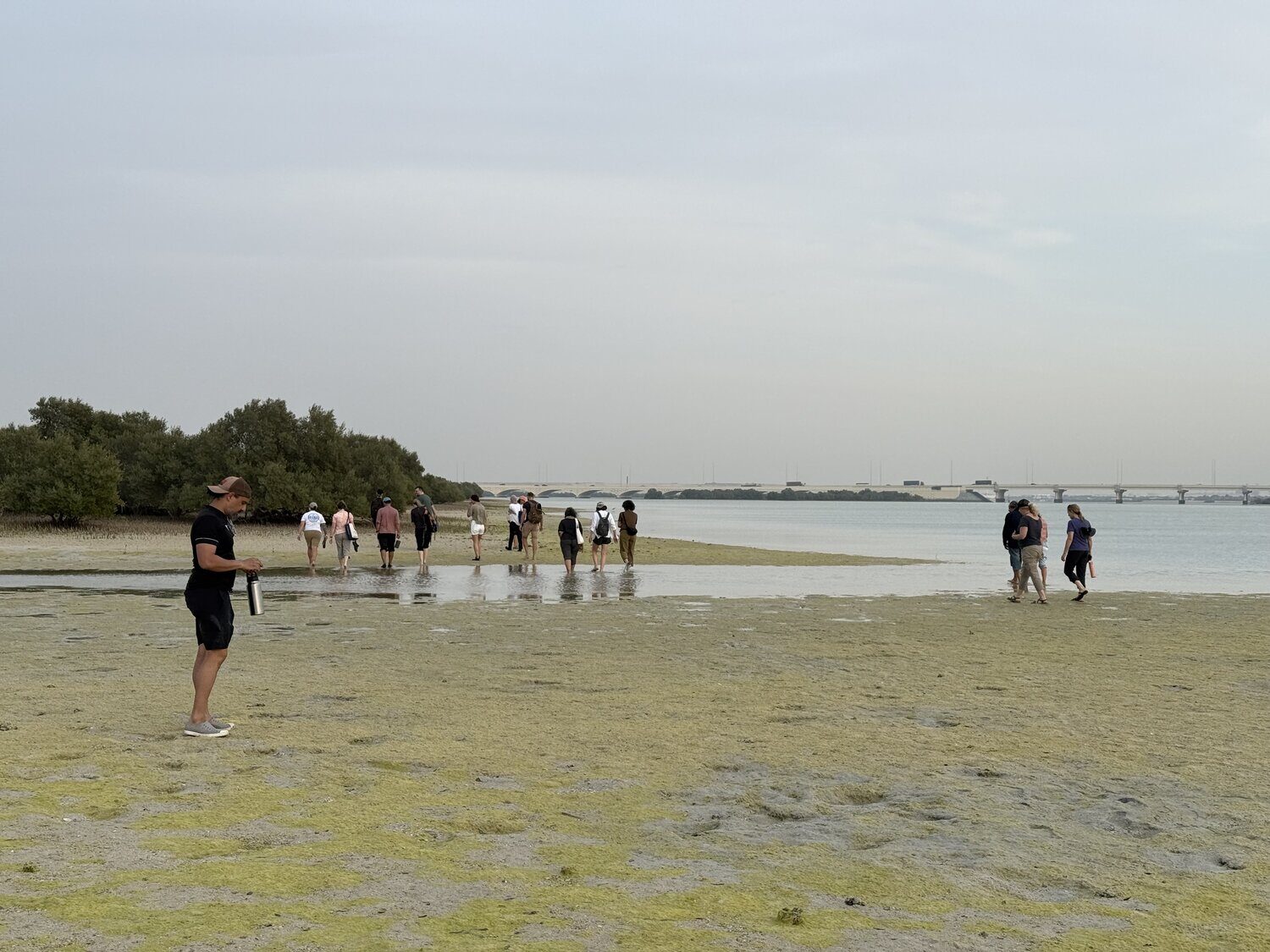
The layout of the space does not prescribe a linear route and allows the visitor to make their own course. While this enables some of the connections between the works to come through, others have to be made in the mind’s eye. Zedani’s tracing of ancient fig trees, the heat as captured by Alfaraj, Al-Fayez’s resuscitation of regional weather vocabularies, AlYaqoub, Hussein, Al Saeed, and Al-Maati’s research into Kuwait’s desert hinterland, Motawa’s investigation into contaminated mudlands, or Ahmad’s rendering of land seen as landscape are all reflective of misgivings about our current relationship to nature. To this can be added Alnoaimi, who is not participating in the exhibition with a tangible work but an intertidal walk. In one way or another, Al-Tamimi, Divecha, Almubarak, El-Malak, Bu Yousuf, and Benton trace a person, a personal story, or a dream, all of which in the end touch on something larger than the individual, whether it is about labor, a history of movement, or a belief system. Al-Maria has two works in the exhibition that participate in both of these, the ecological and individual discursive fields. Harb, Al Dhaheri and Brahim let the human body or its absence speak for itself, either loudly or very quietly. There are also moments of lighthearted rigor: Civil Architecture fuses architectural analysis with humor, and Zakharia and Karimi find joy in bringing people together to pose for portraits. The exhibition’s identity design was also treated as an artwork: commissioned to Mohammad Sharaf, the variety that the exhibition presents is found in the design’s ample use of typefaces, riffing on the Gulf Cooperation Council’s logo as well as loosely referencing a map of the region. A late addition, Deepak Unnikrishnan’s collaboration with Benton’s work in the Reading Room attests to the many conversations that happen among creators, whether they are actual or imagined. We are glad to be able to provide the space for them to become public. Rather than presenting a coherent “picture” or illustrating a curatorial imposition, together, these projects attest to the diverse cultural practice fueled by the Gulf.